Adam Simmonds and Karen Amon have been trying to downsize from their family home for the past 12 months, searching for the right home that will meet their future needs and allow them to live their retirement to the fullest.
“We have looked at approximately 20-25 properties ranging from side-by-side townhouses, two to a block, such as front and rear stand-alone, as well as ground-floor apartments and single houses,” Adam said.
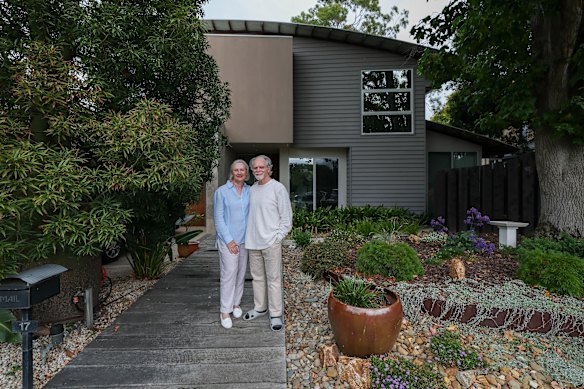
Adam Simmonds and Karen Amon are looking for a retirement-ready home. Credit: Joe Armao
“We do not need anything grandiose. A turnkey transfer: walk out of the old into the new, single-storey, three bedrooms, a garage and definitely easy to maintain. The bedrooms do not need to be large, just comfortable, but the kitchen/living area does need to be a good size because this is where we will be living.”
They’re not alone. Many mid-life Australians hope to downsize, but not just to any smaller property: downsizers often seek a future-proofed forever home that will support them to age in place later, with features such as a single-level floor plan without stairs, and minimal upkeep.
The couple have lived in their family home in Melbourne’s Beaumaris for more than three decades. Their adult children have flown the nest, Karen is retired and Adam is looking to retire this year.
“Our idea was to retire here; however, we’ve realised that the house is really much larger than we need, so we decided to downsize,” Adam said.
They hope the next home they move into will be their last.
“Given this, the ‘right’ home is incredibly important,” Adam said.
By the end of this decade, the youngest Baby Boomers will turn 65, and recent KPMG research shows the average member of this generation owns $1.36 million in dwellings and land. Agents have noticed the demographic trend.
Ray White The Bayside Group’s Kevin Chokshi said many retirees will spend more time looking before buying their “forever” home than other demographics.
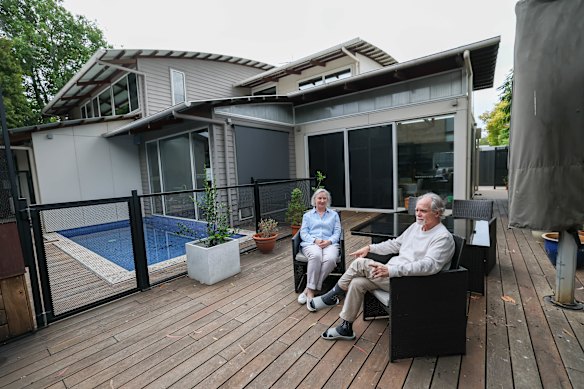
It’s important for Adam and Karen to find the right home for their next move.Credit: Joe Armao
“If a young couple starts looking, they probably spend on average three months or six months before they purchase something, whereas for a downsizer, the journey could sometimes be one, two or three years because they have a specific requirement in terms of what they want,” he said.
“Generally, the brief I get is that this is going to be the last home we buy, and we want to make sure we’re happy with it and it’s perfect and whatever it may be.”
Lisa Hutchinson, co-chief executive officer of over-50s property portal, downsizing.com.au, said demand for properties suitable for retirement is “strengthening and will continue to grow as Australia ages.”
“The number of Australians aged over 75 is projected to nearly double by 2040, [with] demand driven by affordability and lifestyle.”
James Chronis, sales consultant and auctioneer at Jellis Craig Balwyn, has noticed a rise in demand.
″Many owners who bought in the 80s and 90s are now transitioning from larger, two-level brick homes on 650sqm-plus blocks into properties that are more manageable and better suited for long-term living,” he said.
Buyers seek single-level villa units, townhouses with ground-floor master suites, smaller subdivided blocks with minimal garden upkeep or apartments with lift access, as well as properties with minimal or no stairs, low-maintenance outdoor areas, good natural light, strong insulation, and overall comfort.
Storage can be a consideration, added Chokshi.
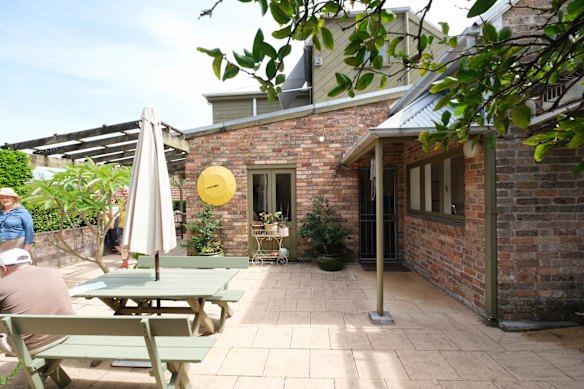
Single-level living is appealing to buyers seeking their last home.Credit: Oscar Colman
“Because they’re coming from larger homes with sheds, good cabinetry, attics, pantries and garage storage, they want room for their belongings, and some want a hobby room as well.”
Homes that support retirees’ hobbies, such as gardening and entertaining, and can adapt to their needs as they age, are something “older people have told us that they value”, said Professor Stacey George, who co-leads the Healthy Ageing Research Group at the Caring Futures Institute, Flinders University, Adelaide.
”As mobility, balance and strength naturally change with age, the design and condition of people’s living space can either support independence or quietly undermine it,” George said.
This includes location.
“Living close to shops, parks, public transport and community centres, and in the vicinity of friends and family, makes it easier to stay active and socially connected — two of the strongest predictors of wellbeing in later life,” George said.
Other retirees look to renovate their current home to meet these needs.
“Our analysis shows that around half of our customers have used their home equity to modify, repair or renovate their home,” said CEO of specialist finance firm, Household Capital, Josh Funder.
For Adam and Karen, enjoying retirement without tying up huge amounts of money in their home is key.
”Our new home will be a base to launch into travel mode and return, entertainment, for sure, easy and familiar, welcoming and sturdy. It will give a feeling of enjoyment, but will most be a place to put your head down at night,” Adam said.